What is a blast freezer
- Share
- Issue Time
- Jan 12,2026
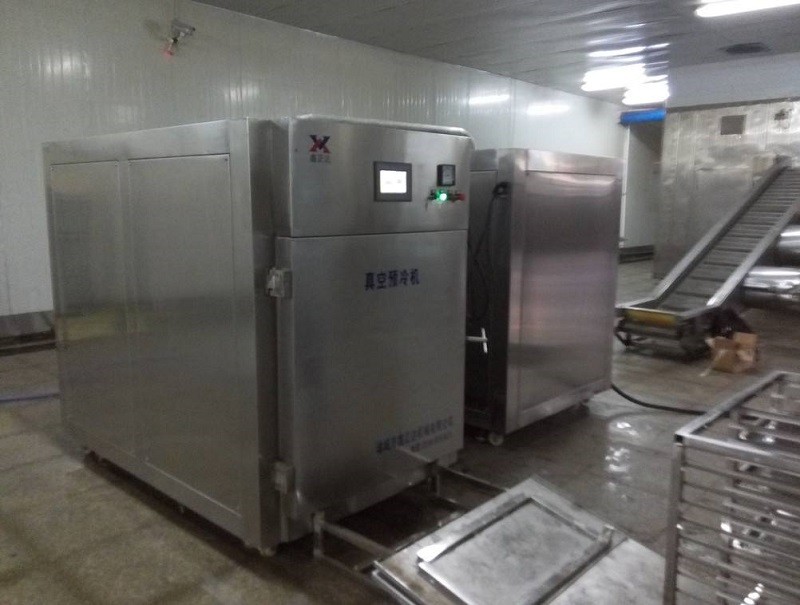
Blast freezer FAQ: Core Function, Compressor, Volume & Price
I. Core Function
Q1: What is the core function of a Blast freezer?
A1: The core function of a Blast freezer, especially a commercial blast freezer, is to freeze products to the target temperature of -18℃ within a preset time. As a professional -18℃ blast freezer, its rapid freezing process can effectively inhibit microbial growth, reduce large ice crystal formation in products, retain product nutrition, taste and appearance, and ensure frozen storage quality. It is widely applied in food processing and cold chain logistics, suitable for freezing meat, aquatic products, fruits, vegetables, rice flour products and other items that require frozen preservation.
Q2: Is -18℃ the only target freezing temperature for blast freezeer?
A2: -18℃ is the standard target temperature for most blast freezer, including commercial Blast freezer, complying with national food safety standards for frozen storage. For special products (e.g., high-end seafood, biological products), a -18℃ quick-freezing warehouse can be customized to lower temperatures (-25℃, -30℃), but this customization will directly affect blast freezer compressor selection and increase overall equipment costs.
II. Compressor Selection
Q3: How does freezing time affect blast freezer compressor selection?
A3: Freezing time directly determines the refrigeration capacity required by a Blast freezer, which is the core basis for quick-freezing warehouse compressor selection. Short freezing time requires a high-power compressor (such as a screw compressor for blast freezer ) to provide sufficient cooling capacity to reach -18℃ on schedule; longer freezing time only needs a medium-power piston compressor for blast freezer. Different compressor types and power levels are precisely matched based on freezing time, ensuring the freezing efficiency and stability of the blast freezer .
Q4: What are the common compressors for blast freezer and their matching rules?
A4: Common compressors for blast freezer and their matching rules:
1. Piston compressor for blast freezer: Suitable for small/medium blast freezer with long freezing time (4-8 hours to -18℃), featuring stable operation and low initial cost, making it an ideal choice for small food processing plants.
2. Screw compressor for blast freezer: Suitable for large blast freezer or scenarios requiring short freezing time (2-4 hours to -18℃), with large cooling capacity and high efficiency but higher cost. For ultra-fast freezing (less than 2 hours to -18℃), high-power screw compressors for blast freezer or multi-compressor parallel systems are needed to meet the demand.
III. Volume Selection
Q5: What is the key principle for blast freezer volume selection?
A5: The core principle for blast freezer volume selection is "suitable for product capacity, not excessively large"—that is, to choose a suitable volume blast freezer. Volume should be determined by daily/batch freezing capacity, product stacking method (height, gap), and auxiliary space for equipment. Choosing a suitable volume quick-freezing warehouse avoids refrigeration energy waste and effectively reduces initial investment and long-term operation costs.
Q6: What risks come with an overly large blast freezer?
A6: Overly large volume of a blast freezer leads to three main risks:
1. Increased energy consumption: More energy is needed to maintain the target temperature of -18℃ in a larger space of the quick-freezing warehouse, significantly raising daily electricity costs.
2. Higher initial investment: More insulation materials, steel structures and larger-scale refrigeration equipment are required for a large blast freezer, increasing purchase and construction costs.
3. Low utilization rate: Idle space causes uneven temperature distribution in the blast freezer and reduced freezing efficiency, failing to exert the optimal performance of the equipment.
Q7: How to accurately calculate the required volume?
A7: To accurately calculate the volume of a suitable volume blast freezer,
you can follow these simple steps:
1. Confirm daily freezing capacity (e.g., 5 tons/day).
2. Determine freezing cycle (e.g., 6 hours/batch, 4 batches/day).
3. Calculate single-batch capacity (5÷4=1.25 tons/batch).
4. Calculate volume based on product density and stacking coefficient (e.g., 1.25 tons of frozen meat needs 1.5-2 m³, plus auxiliary space for equipment installation and operation, the total volume of the blast freezer is about 2.5-3 m³/batch).
It is recommended to consult professional technical personnel to adjust the calculation based on specific products and on-site workshop conditions.
IV. Price-Related Questions
Q8: What are the main factors affecting blast freezer prices?
A8: Core factors affecting blast freezer price:
1. Compressor type and power: Shorter freezing time means higher power and cost (screw compressor for blast freezer is more expensive than piston compressor for blast freezer ).
2. Warehouse volume: Larger volume of the blast freezer increases material, equipment and construction costs.
3. Customized requirements: Customizing lower temperature than -18℃, adding advanced temperature monitoring systems, using high-quality insulation materials, etc., will all add to the blast freezer price.
Among them, compressor selection and warehouse volume are the key determinants of the base price of a blast freezer.
Warm Reminder: To customize a cost-effective blast freezer, especially a suitable volume blast freezer that meets production needs, it is recommended to provide suppliers with the following key information:
1. Daily/batch freezing capacity of products;
2. Required freezing time (to reach -18℃);
3. Specific type and characteristics of products;
4. Workshop space size and layout restrictions.
Professional suppliers will tailor a targeted solution based on these details, balancing freezing efficiency, equipment cost and operation cost.